
I’m Valeria Pintus, real estate agent and owner of the Ajò Casa agency. Today, I want to talk to you about a new development that, for those working in real estate in Sardinia, is anything but secondary: the Salva Casa Decree and the topic of swimming pools.
For years, the real estate sector has existed in a gray area of interpretations, conflicting opinions, and uncertainties. The Salva Casa Decree, however, has finally introduced clear, detailed, and guidance, with very little room for misunderstanding, something that happens very rarely.
For those of us at Ajò Casa who deal with sales, this means something very concrete: first understanding the opportunities, limitations, and risks, especially in the tourist real estate market. And one interesting opportunity concerns the construction of swimming pools, particularly those up to 30 square meters.
What changes, in practice?
With the Save Home Decree, a building permit is no longer required to build a swimming pool. No building permits, no endless waits. A zero-day SCIA (Consciousness and Safety Notice) submitted by a qualified technician is sufficient: a formal declaration to the Municipality that allows work to begin immediately.
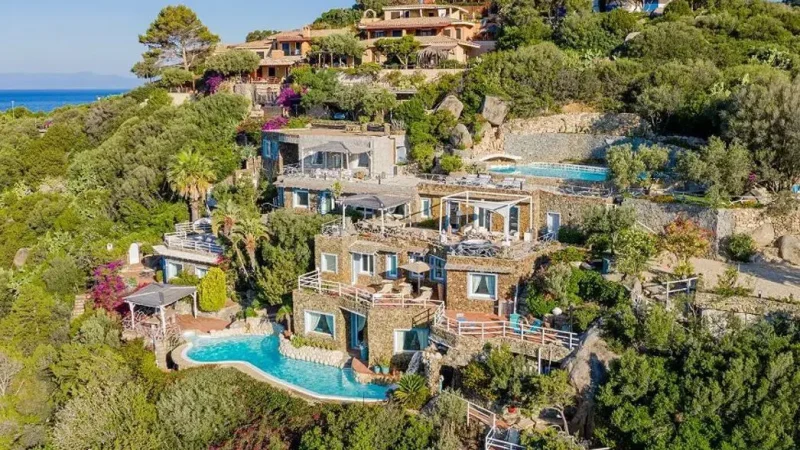
But be careful: this applies outside restricted areas. If the property is located on a coastal area, or otherwise subject to landscape restrictions, the pool must still obtain landscape approval. And this is where smart design comes into play. If you want your pool to be approved for landscape planning, the goal is simple: minimize its impact on the landscape.
How is this done, in practice?
- First: choose an in-ground or well-screened pool, paying careful attention to the filling and drainage system.
- Second: use materials consistent with the context, such as local stone and native vegetation for screening.
- Third: always accompany the application with realistic photo-inserts, preferably with sea views, to demonstrate that the visual impact is truly limited. And, when possible, seek a preliminary opinion from the Superintendency or the regional Landscape Protection Office before submitting the official application.
This step often smooths out the process and reduces the risk of delays or requests for additional information. But there are also mistakes to avoid, and they are serious ones. Starting work without a landscape permit.
Making unauthorized changes during construction. Building a swimming pool visible from the sea without adequate mitigation. Using materials out of context. These are all situations that can stall the project or, worse, turn it into a legal issue.
And what about the timeframe? As a rough guide: – the landscape investigation takes 2 to 4 months, but may vary; – the SCIA is immediate, but only after the landscape approval; any negative opinions or requests for additional information can significantly extend the timeframe.
Last question, one that many ask me: What if the pool has already been built illegally?
In this case, unfortunately, there are no shortcuts. A regularization is necessary, because the legislation clearly distinguishes between SCIA (Regional Authorization for Building and Construction) under authorization and SCIA (Regional Authorization for Building and Construction), as required by Article 14 of Regional Law No. 23 of 1985.
The key message is simple: building a pool is easier today, but doing it well is still crucial. And in the tourist real estate market, a regular, well-designed, and landscape-integrated pool can make a huge difference to the value of the property. If you want to understand how to proceed without risks, the first step is always the same: get informed before building.